Sarah Watt – animator, director died of breast cancer – secondary bone cancer

The Australian Michael Bodey
November 09, 2011 12:00

OBITUARY
Sarah Watt
Animator, director.
Born August 30, 1958.
Died Melbourne, November 4, aged 53.

SARAH Watt was an animator of rare talent who became an auteur of distinctly Australian films, mixing pathos and laconic humour.

Her warmth, lovable personality and stoic nature were unlikely attributes given the morbid coincidences between the highs of her working career and the travails of her personal life.

Her breakout short film, Small Treasures, a semi-autobiographical story that touched many, was based on her experience of losing her first son, Cosmo, in childbirth. Her father died of cancer as she made a short film, and Watt was diagnosed with breast cancer as she finished post-production on Look Both Ways, her acclaimed first feature.

Watt died at her Melbourne home on Friday as 3012 2012, an exhibition of her photographic works, premiered at the Post Industrial Design gallery in West Footscray. Her death, at age 53, came with the third draft of her latest film in the works and just weeks after the publication of Worse Things Happen at Sea, a book she wrote with her husband, the actor William McInnes.

Her family said she lived “a life of courage, humour, intelligence, generosity, honesty and grace”.

Friends and peers remember those characteristics with affection. Professionally, the animator, artist, photographer and director was a distinct creator, an auteur with an Australian sensibility for suburban melancholy, a love for the beach and robust Aussie charms.

Personally, Watt was a warm soul, seemingly willing to take on life’s rough justices with a shrug of the shoulders and her impish, wide grin. “She didn’t like things to be sugar-coated,” says friend and producer Fiona Eagger. “She liked to be real.”

Animator Adam Elliot agreed: “There wasn’t a pretentious bone in her body.”

The self-deprecating Watt admitted she stumbled while searching for a vocation after school before sticking with art studies at the Phillip Institute of Technology, which she “failed reasonably miserably”. She continued as a practising artist through the 1980s until trying animation at the Victorian College of the Arts, and falling in love with the process and the output.

She graduated from college with the animated film Catch of the Day, which played at the prestigious Annecy animation festival in France.

Watt was a relatively prolific young animator with a classical approach that honoured the style emanating from National Film Board of Canada animators such as Norman McLaren. Her animations took on a painterly, fluid grace, eschewing harsh precision.

Watt earned attention with episodes of The Web, a television series on endangered species, before releasing Small Treasures, her first major animated short based on the story of her first pregnancy in which her son died of a prolapsed cord. It won prizes at the Venice and Melbourne film festivals in 1995.

Animators deride peers who move to live action filmmaking as “crossing to the dark side”. Few succeed. Watt’s debut feature film Look Both Ways, covered characters bound by a random death, and McInnes’s character is touched by cancer. It upended the theory that animators can’t cross over. Critic Roger Ebert praised the film as “poetic and unforgiving, romantic and stark” and it dominated the Australian Film Institute Awards in 2005, with prizes for best film, best director and best original screenplay.

Look Both Ways displayed Watt’s deft combinations of pleasure and pain, humour and tragedy. When she was diagnosed with breast cancer while finishing the film, her peers joked it could only happen to her.

The work also showed Watt’s storytelling talent. Her students in the Victorian College of the Arts animation course dubbed her the “Script Nazi” for her adamant focus on story and script, when so many animators become engrossed in the look or style.

“I always credit Sarah for enlightening me on something that’s really logical but most filmmakers forget,” says Elliot, who earned an Oscar for Harvie Krumpet.

Her 2009 feature film, My Year Without Sex, continued her fascination with mortality and meaning, with a few more laughs.

Watt’s works were so recognisable as her unique visions that Eagger recalls not daring to assist her narratives, telling her: “I can’t act as a producer on your story. I’ll do anything to help you make it, but it’s your story.”

Away from work, Watt and McInnes were known as a generous, hospitable couple who went beyond the call for their peers. And few will forget Watt’s elfin nature, her propensity for a mischievous rejoinder or sly joke, whatever the circumstance.

Watt was diagnosed with secondary bone cancer in 2009. She is survived by McInnes and the couple’s two children, Clem, 18, and Stella, 13.

I was so sorry to hear of her death after reading about her and her creative work only recently as well as two weeks ago hearing her husband, William McInnes, speak so fondly of her on Radio National . In reading about a vibrant women’s death at 53yrs I’m reminded of my mother’s death at 56 and my own diagnosis at 35. My teeth grind shut as if to hold on tighter to a life force (health) that I’m not that in control of. Silent wishes of ‘not me’ please ‘not me’ go round and round, and then I’m left simply with a sadness that this shitty disease has killed another woman.

Pink Ribbon Day – calculate your risk


My team Breast Friends for a Cure are doing the ride again next year – watch this space – they’ll be more to come. We’re already in training cycling 45kms +/- every Sunday.

Today is Pink Ribbon Day. If you’re interested you can calculate your risk of breast cancer following this simple tool: Calculate Your Risk

Good friend, Katie Deal, in today’s newspaper – praising Chicks in Pink charity.

Right Winger

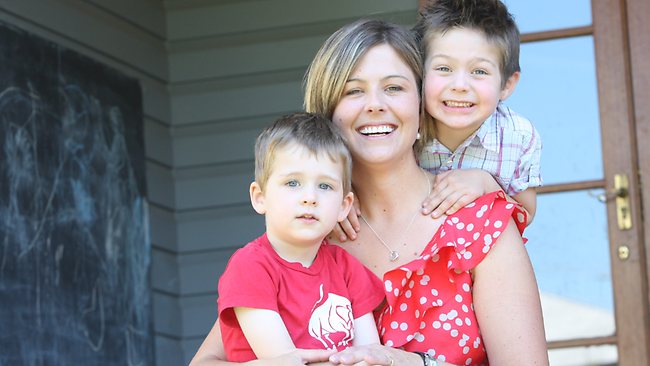
Above is a picture of good friend and fellow ‘Right Winger’ Katie Deal. The story below appears in today’s QLD paper – The Courier Mail:

Young mum takes radical step for sons
FAMILY HISTORY: Breast cancer survivor Katie Deal with her sons, Joshua, 4, and Oliver, 2. Picture: Jono Searle Source: The Courier-Mail
IT’S a decision many women who have a strong family history of breast cancer grapple with.
But, for Katie Deal, to have a double-mastectomy at just 30 years of age after she was diagnosed with cancer in her right breast, was the only choice – she had two young sons who needed her.
Oliver was just eight months old and Joshua two years old when Mrs Deal learned she had the same cancer suffered by her mother, aunt and grandmother before her.
“I said anything that will improve my chances – do it,” Mrs Deal said.
“If they wanted to cut my leg off, I would have said: ‘Do it.’ The survival mode is so strong as a mother. You just want to be there for your kids.”
Initially, she had a lumpectomy, to remove the tumour from her breast, then six months of chemotherapy and six weeks of radiation.
But a year later – after taking into account she had been diagnosed with triple-negative breast cancer, a particularly aggressive form of the disease – Mrs Deal decided to have a double mastectomy to reduce her risk of a recurrence.
Doctors performed her reconstruction surgery at the same time.
The 32-year-old, who has since tested positive to a mutation in the breast cancer gene BRCA1, praised breast cancer charity Chicks in Pink for helping to soften the emotional kinghit that came with her diagnosis.

There’s riding a bike and then there’s riding …

(Trial Riding as performance art.)

I went for a solo ride around a common circuit today called ‘The River Loop’. Many Brisbane cyclists do this loop on weekends. From door – to – my door it’s about 45kms or so. I needed to do something highly physical to force my mind off pending results for the ovarian/uterine scan I had yesterday. A 12mm benign calcification is present on my uterus, as it is with many women who’ve had children or are aging (maternally). Fear returns so rapidly when ‘something’ shows on scans and so forth. This is how it’ll be from now on around medical check-ups or bodily sensations that aren’t easily explained, as the bad thing has happened – I had the big C – and it could come again. May it never!

The concern I have with my breast cancer spreading to my ovaries or uterine lining is so great that next year I’m having a radical hysterectomy. I’m also doing this so that I can stop going into the day oncology unit every month and getting a zoladex injection to turn my ovaries off. Unfortunately, I can never use them again and at 37yrs of age they still pump out way too much oestrogen to be left alone. Plus the needle that delivers my monthly medical pellet – zoladex injection – is 0.5mm diameter.

Footnote: my team ‘Breast Friends for a Cure’ returns next year for the 2012 Ride to Conquer Cancer. This week I’ve started getting bike fit again after nearly 7 weeks hiatus from regular riding. Of course I was away in New York for two of those weeks.

A tattooed bra

My friend Katie sent this picture to me. It’s remarkable body art! I’d imagine the woman would want to walk around with an open shirt or topless to show it off. Before my bi-lateral mastectomy reconstruction I fantasised about getting a moth tattooed across my chest in the style of natural history illustration. I saw this as a way of reclaiming my body. However, after getting my nipples tattooed the last thing I want to do now is get an inked needle inserted into my chest again and again – no more pain for me, for now. Also my idea of reclaiming my chest or my sense of self through tattooing has altered. Maybe someday!

Last visit with plastic surgeon today

I had my final breast and areola tattoo check today. If the colour fades too much on my nipples I can return and get a fill-in – otherwise – I’m another doctor down. I got quite attached to my plastic surgeon – he was interesting and his steady natured self removed my dangerous breasts and then returned them anew.

New York, New York: my first solo travel since the birth of my son and breast cancer treatments.

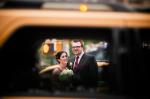
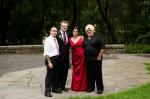
Photo essay of a dear friend’s wedding. I was honoured to do a reading at her wedding by William Stafford “You Reading This, Be Ready”:

Starting here, what do you want to remember?
How sunlight creeps along a shining floor?
What scent of old wood hovers, what softened
sound from outside fills the air?

Will you ever bring a better gift for the world
than the breathing respect that you carry
wherever you go right now? Are you waiting
for time to show you some better thoughts?

When you turn around, starting here, lift this
new glimpse that you found; carry into evening
all that you want from this day. This interval you spent
reading or hearing this, keep it for life –

What can anyone give you greater than now,
starting here, right in this room, when you turn around?

Breast Cancer Tumour Subtypes

I went to the BCNA’s ‘Offering Strategies to deal with uncertainty and anxiety’ conference. The take-away for me was Dr Nicole McCarthy’s summary of breast cancer subtypes which I’ve summarised below. I knew the various subtypes but did not know the naming of them Luminal A/B. So, here it is for others:

Breast Cancer tumour subtypes
Luminal A: ER+ and/or PR+ and HER2- (42-59% prevalence)
Luminal B: ER+ and/or PR+ and HER2+ (6-19%)
HER2 overexpressing: ER- and/or PR- but HER2+ (7-12%)
Triple negative/basal-like: negative for all three (above), cytokeratin 5/6 + and/or HER1+ (15-20%)

*Key
ER: (o)estrogen receptor
PR: progesterone receptor
HER: Human epidermal growth factor receptor

I was very interested to hear about this:
Oncotype DX assay (USA): first breast cancer test that provides individual, quantitative assessment of the likelihood of disease reoccurrence. This test would be useful for women who are node negative and making a decision around undergoing chemotherapy or not.

The story of my portacath insertion

My portacath scar itches on occasion and recently I’ve bothered to oil it in the hope its puckered, red edges might fade. I thought I’d share a story from my portacath insertion:

“Welcome!” My interventional radiologist boomed into the waiting area and stood looking down at me on the trolley. He was warm, in his mid-forties with a camp manner.
“Welcome,” he said again, then went through an explanation of the pending procedure for fitting me with a portacath.
I piped in, “There’s a letter from the anaesthetist who did my lumpectomy about drugs to avoid. I get intensely nauseous.”
“I’ve read it and don’t worry because I’m sending you into a twilight zone. You’re not going under a GA. Most people don’t wake with nausea. You’re actually conscious and able to speak with me; you just won’t remember anything you’ve said.”
“Great! But I want to know what I’ve said.”
“Yes, I’ve had some interesting conversations,” he mused.
I was suddenly apprehensive: what if I say odd and embarrassing things?
He left and I returned to reading a book on brain plasticity that I couldn’t put down by Norman Doidge M.D., The Brain That Changes Itself (2007). I was reading Dr Doidge’s chapter on pain where he told the story of the neurologist, Dr Ramachandran, a renaissance man of many passions who’d assisted an amputee patient Phillip Martinez to successfully ‘amputate’ a phantom limb by fooling the patient’s brain to ‘see’ his amputated hand move using a mirror box. The intense pain of Phillip’s frozen elbow disappeared after one month.
Medical memoirs and readable medical books interested me in general but my growing fears about Felix’s development made me seek out stories of atypical learners and about people whose behaviour or brain functioning made them appear ‘retarded’ or different but then later on as adults functioned well in terms of communicating their intellect or thoughts and could fit in with normal society.
Five trolleys were lined up side-by-side with no screen between us. I was on the far right. If you looked down the row of men and women dressed in white theatre gowns and covered in white blankets I glimpsed a shimmering aura of emotion; almost physical in its presence. A young man held his body stiffly. He grimaced when he moved his back. He stared straight up into the ceiling. The woman next to me had a round face. She was wearing a loosely knitted beanie and peered about with curiosity as if she sat at a party and hadn’t been introduced to anyone yet. I avoided eye contact so I could read.
“What are you here for?” she said as way of introduction.
“I’m getting a portacath put in.”
“I came here to get mine out.”
Then I was interested. “What did you have it for?”
“Breast cancer.”
“Who’s your oncologist?”
She had the same one as mine, and said that she thought the oncologist was “lovely and always dressed nice”.
I agreed with her.
She told me about the alleged side effects, but then said, “I didn’t experience any of them apart from tiredness.”
“You’re lucky. I hope I have the same run as you.”
“Yeah,” she said. The woman was likely somebody’s grandmother and I could see her sharing a sponge cake with a child and pouring pretend tea into plastic cups for as long as the child wanted to play the game.
My sprightly radiologist swung into view. He and a surgical nurse wheeled me down a short corridor toward the theatre. I checked the doctor’s name on my identification wrist band.
“There’s a different doctor’s name on my tag here.” I pointed to my left wrist.
“Yes, Dr _____. He’s operating in the other theatre. There have been some changes to the roster of patients. You can have him if you like.”
“No, I like you.” And I did.
“Good, I like you too.” The radiologist was someone who could be described as neat. He had well combed short hair with a smattering of greys. Tight skin over a toned face with an aquiline nose and intelligent eyes.
The atmosphere in the room was mirthful. My name replaced the previous patient – another woman – on the computer display screen, which hovered about the table.
“Someone’s been knitting in here,” said a young male nurse. He untangled a black, rubber slinky with a probe on the end that clipped onto a person’s toe or finger to measure the oxygen levels in their blood.
I was shaking. My nerves were swamped — again — like they’d been the day I had my CT scan.
The anaesthetist who sedated me for my lumpectomy wrote a letter suggesting TIV (Total Intravenous Anaesthesia) to reduce post-operative nausea. For days after the lumpectomy I’d experienced waves of intense I’m going to vomit surges. Being on my back again about to be put under and operated on, even for a minor operation like a portacath, made me fearful.
Later on another anaesthetist, my only female one, got the cocktail right and informed me that the days of nausea after my lumpectomy were likely due to a reaction to the anti-emetics, not the anaesthetics. Some you just cannot win.
The radiologist inserted a ten centimetre pin cushion under my skin above my left breast: sewn in place the portacath’s tail threaded up over my left clavicle and into my jugular vein. Chemotherapy would deliver its chemical power straight into my heart.

God only gives you what you can handle – oh really?

Oh yes! Let’s break down what this throwaway line is really saying:
First, most people who say this to me are not Christians or god following types. What god are you talking about then? I want to ask. Are you saying that there is a God who decides what each and every person’s challenges in life will be? Or rather there’s a pre-destined life path that each of us follows and by having difficulties in life or ill health or bad luck visit you is merely living out the life that was tailored just for you? And if there is a God as imagined or related to in Christian faith or another faith I do not believe they would know particulars on earth to warrant delving into each and everyone’s existence. So that’s the god query done in brief.

Second, then there’s the ‘what you can handle’ part of the sentence. What’s the alternative? That after a breast cancer diagnosis and commencing chemotherapy you stop because it’s horrible? What of those people who go through a full regimen of cancer treatment, which doesn’t work? What of those people who sink into a clinical depression and cannot care for their family, operatie in ther jobs or close down on their partners? Because they have been given too much and can’t handle it.

So to all those who don’t know what to say but wish to say ‘You’re coping really well from where I’m standing,’ say just that and please don’t throw the line out ‘god only gives you what you can handle’ because it’s meaningless and totally unhelpful. And also dismissive of what you’re really going through as an adult who can dictate your own life: decisions and all.
Plus as a reflex I often view the person’s life saying the statement and think ‘Oh! So you can’t handle very much at all then?’